Rural Canada
Rural Canada
Climate Change in Rural Canada
What do you already know?
Before you review the following information, take a moment to answer the following questions.
- What might be unique to a rural or remote setting in how people experience climate change?
- Who might be most impacted in a rural or remote setting?
Although fewer people live in rural and remote areas, these communities often experience greater climate vulnerability due to limited infrastructure, services, and institutional support. Examining these contexts in more detail helps highlight how climate change reinforces existing inequities. Rural and remote communities face their own distinct climate challenges, shaped by geography, infrastructure limitations, and economic patterns.
According to the Small and Rural Communities Climate Action Guidebook (2025), small and remote communities experience climate change differently than urban areas, in part because of:

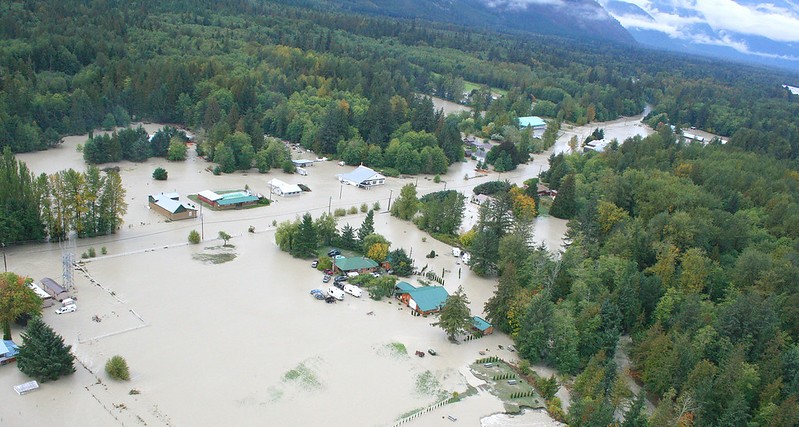
Greater exposure to multiple climate risks such as wildfires, floods, droughts, extreme winds, and permafrost thaw.

Limited access to emergency and healthcare services, which can delay response and recovery.
Higher food and transportation costs, as supplies must travel longer distances and are more sensitive to extreme weather.

Economic ties to climate-sensitive industries, including agriculture, fishing, forestry, and tourism, which are disrupted by changing weather patterns and ecosystem shifts.
These conditions often mean that climate events persist longer and require different adaptation strategies than in urban settings. The Guidebook highlights that rural places are more likely to face compound shock events—situations where several climate stresses occur at once or in quick succession, stretching limited local resources.
Why Rural and Remote Contexts Matter for Climate Justice
Climate change can reinforce existing inequities in small communities, especially where populations are aging, youth are leaving for urban centres, and local economies are tied to natural resources. When rural communities lack support for adaptation planning, infrastructure upgrades, and emergency readiness and recovery, climate events exacerbate inequality.
What to learn more?
Check out this short CBC article to learn more about rural Canadians experiences with climate change.